Why Thinset Removal Is the Part That Decides Your Timeline
Pulling up tile is usually the quick part. Getting the thinset off the slab is what sets the schedule — and what decides whether your new floor goes down flat.
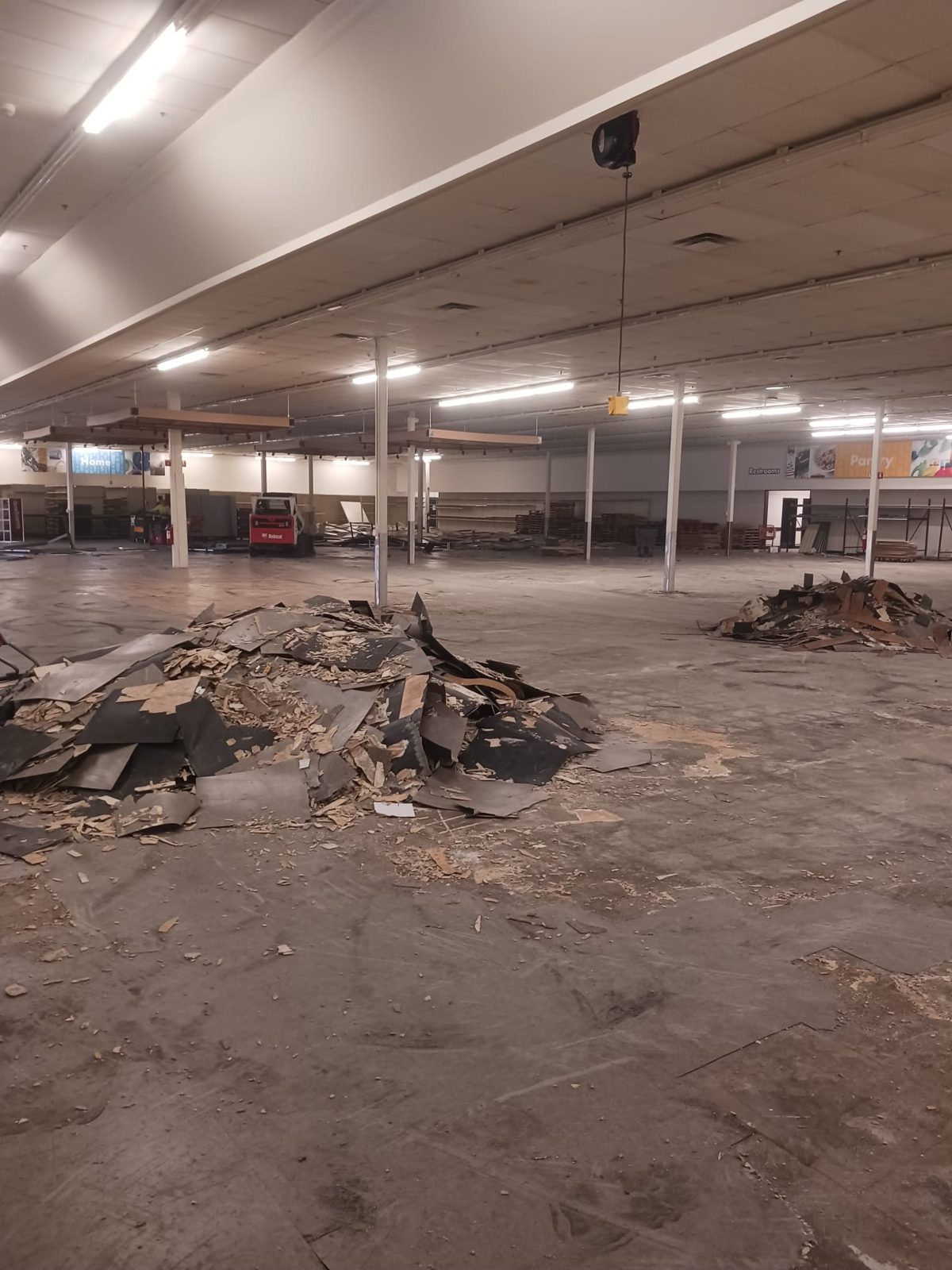
Thinset removal decides your timeline because it is the slowest and least predictable part of taking out a tile floor. The tile itself often comes up quickly; the layer of mortar underneath is what takes the time, and how much of it there is cannot be known for certain until the tile is off.
If you are replacing a tile floor anywhere in Las Vegas, this is the part of the job worth understanding before you set dates with your installer.
What thinset actually is
Thinset is the cement-based mortar used to bond tile to a concrete slab. It is spread with a notched trowel, the tile is pressed into it, and it cures hard. Done well, it grips both the tile and the slab very tightly — which is exactly what you want while the floor is in use and exactly what makes it stubborn when the floor has to come out.
When tile is broken loose, the thinset rarely comes with it cleanly. Most of the time it stays stuck to the slab in ridges, patches and lumps. Sometimes it pops off in sheets. Sometimes it has to be ground or scraped off a little at a time. Two tile floors that look identical from above can be very different jobs underneath.
Why the new floor cares about it
Your new flooring needs a flat, clean, sound surface. Luxury vinyl plank will telegraph every ridge left under it. New tile set over old thinset lumps can end up with lippage, hollow spots and cracks. Many flooring manufacturers and installers have their own flatness requirements, and they will ask for the slab to be cleaned to a standard before they start.
That is why 'tile removal' and 'tile removal with the slab cleaned for new flooring' are two different quotes. The second one is what most homeowners actually need, even if they did not know to ask for it.
What makes thinset harder or easier to remove
We will not give you a number of days without seeing the floor, but we can tell you what moves the job one way or the other.
How thick it was applied. A thin, even layer comes off faster than a heavy bed that was used to make up for an uneven slab. Whether it is thinset or a full mortar bed. Some older installations set tile in a thick mud bed rather than a thin layer of thinset, and that is a much bigger removal. How well it bonded. Strong bonds hold on to the slab; weak bonds sometimes release in large pieces. What is under it. A crack isolation membrane, an old sealer or leftover adhesive from a previous floor all change the approach. And how clean the slab needs to be for the specific floor going down next.
Room layout and access matter as well. Open rooms let equipment work efficiently. Small bathrooms, closets and edges along cabinets and door jambs take more hand work.
Why nobody can promise the exact amount before the tile is up
This is the honest part. We can look at the tile, check how it sounds, see how it was installed around the edges and make a well-informed estimate. What we cannot do is see through it. Occasionally a floor comes up and the thinset is thinner and weaker than expected. Occasionally it is thicker and harder. A contractor who promises certainty before the tile is lifted is guessing.
What we do instead is explain up front what we expect, what could change it, and how we will communicate if the slab turns out to be different from what the surface suggested. That way your installer is not surprised, and neither are you.
Dust and thinset
Breaking tile and removing thinset creates dust. There is no version of this job that is dust free, and we tell every customer that before we start. What we do is contain the work area, protect adjacent rooms and surfaces where we can, manage debris as we go and clean up before we leave. Planning for some dust is part of planning the project.
How to protect your schedule
Tell your installer who is doing removal and ask them what slab condition they need. Share that with us before we quote. Give the project a little room between the end of removal and the start of installation, so a slab that needs extra attention does not collide with the installer's arrival. And if you are replacing tile in several rooms, decide early whether it all comes out at once or in stages.
A quick checklist before removal day
Clear the rooms of furniture and anything fragile. Decide whether baseboards are being saved or replaced. Confirm what the next floor is and what your installer needs. Keep pets and children out of the work area. And plan a thorough cleaning between removal and installation, because fine dust settles on everything even with good containment. Those small steps make the thinset stage go more smoothly for everyone.
Where this fits with our services
Thinset removal is part of how we handle tile work, rather than a separate service page on this site. You can see how we approach it on our tile and stone removal page, and our broader floor removal page covers the rest of the process.
We work across Las Vegas, Henderson, North Las Vegas, Summerlin, Spring Valley, Paradise and Enterprise. If you have a tile floor that needs to come up and a new floor waiting to go down, call us for a free estimate. We will look at the floor, explain what is likely under it, and give you an exact quote.
Need that floor gone?
Floor removal, concrete saw cutting and full interior demolition across the Las Vegas valley — free estimates.