Tile Removal in Las Vegas: Why the Slab Underneath Decides Your New Floor
Your installer is not looking at the tile. He is looking at what is bonded to the concrete under it.
Most homeowners in the valley think of tile removal as a tile problem. You have travertine in the entry, porcelain through the great room, maybe a mud-set floor in a bathroom from an older build, and the job in your head is getting all of that broken up and carried out of the house. That part is loud, it is physical, and it is the part everyone pictures.
It is also the part your flooring installer cares about least. When he walks the house after demolition, he is not looking at where the tile used to be. He is crouching down with a straightedge, running his hand across the concrete, and deciding whether the slab you are handing him is something he can install over.
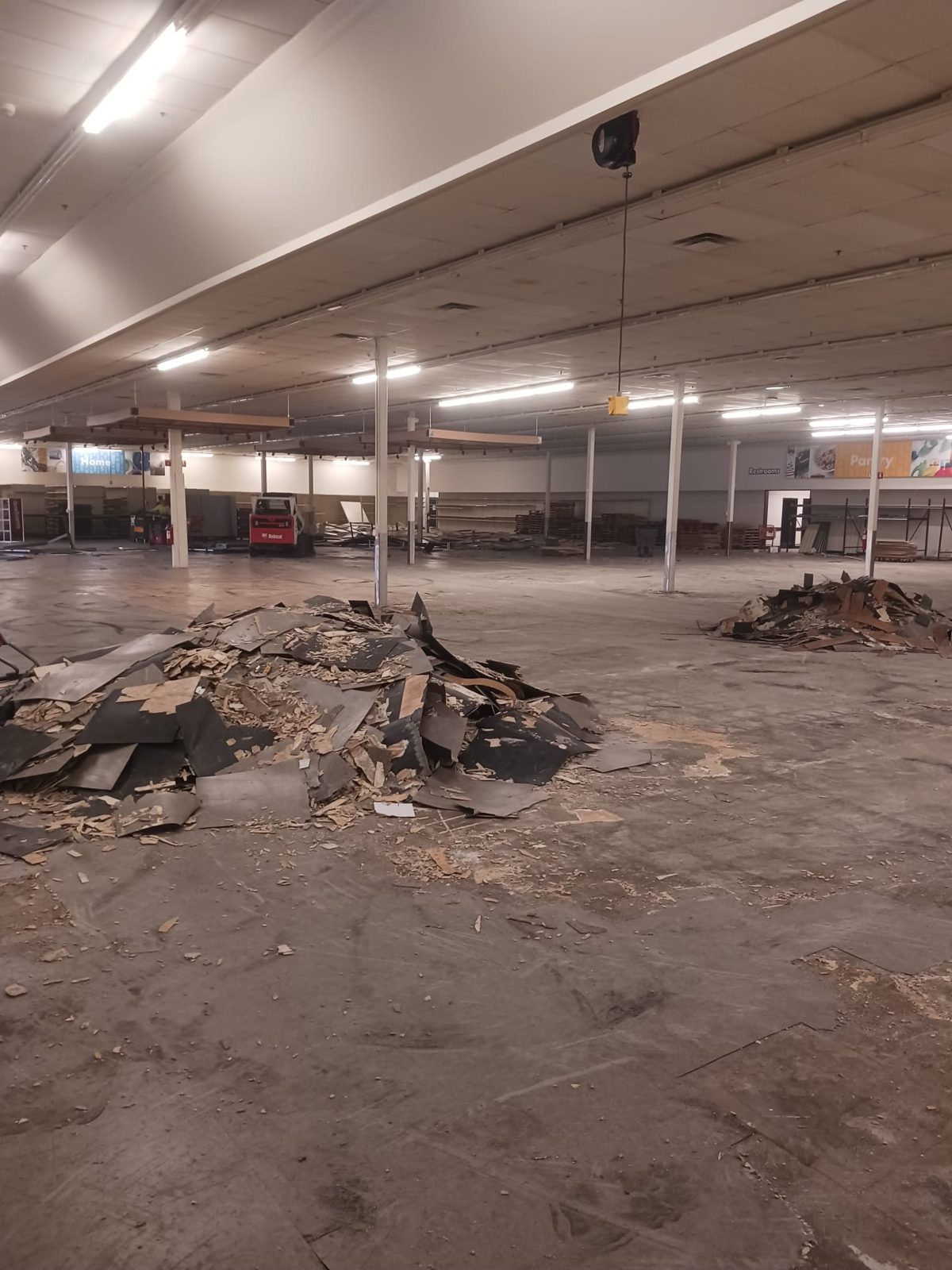
Here is why. Tile does not sit on concrete. It sits in a layer of thinset mortar, and in older Las Vegas homes it may sit in a full mortar bed several times thicker than that. When the tile breaks free, that bonded layer stays behind. It is ridged from the original trowel pattern, uneven from wherever the original installer built up a low spot, and in places it is stubbornly stuck. Removing tile is one scope. Removing what the tile was glued to is a second one, and it is the scope that decides your finished floor.
Leave the thinset and the problems are predictable. Luxury vinyl plank is thin and flexible, so it telegraphs every ridge underneath it — you will see and feel the old trowel lines through a brand new floor within months. New tile set over old thinset ends up with lippage, where one edge sits proud of the next and catches a bare foot. Glue-down goods bond to the old mortar instead of the concrete, and that old bond becomes the weakest link in your new floor.
Flatness is the second half of the story, and it surprises people. A slab that performed fine under tile can fail under vinyl plank, because tile installers have a thick mortar bed to bury small dips in and plank installers have nothing. Add to that the reality of concrete in this valley: shrinkage cracks, cold joints, and slabs poured decades ago to tolerances nobody would accept today. A floor can be structurally sound and still be too wavy for the product you picked out.
So the useful question to ask any demolition bid is not how fast the tile comes up. It is this: does the price include thinset and adhesive removal, and will the slab be handed over ready for installation? A bid that says nothing about the mortar is quietly leaving that work to you or to whoever installs next, and that person will bill for it at remodel rates while your project sits.
That is how we scope tile and stone removal here. The tile comes out, the thinset and mortar bed come off, the slab gets cleaned down, and we tell you honestly what condition the concrete is in before the new material is ordered. If there is a crack that needs attention, a low area that will need a self-leveler, or staining that suggests moisture, you hear about it while the floor is open and cheap to address — not after your installer stops work on day one.
We will also tell you the unglamorous parts up front. Our removal system is not dust free. We use plastic containment on doorways and openings, seal vents in the work area, bag and container debris as it comes up, and clean thoroughly before we leave, but anyone promising you zero dust on a tile and thinset job is selling you something. Dense material — porcelain, natural stone, terrazzo, mud-set floors — is slow, heavy and hard on equipment, and it is honest to say so before you book instead of after.
What you get from a crew that treats the slab as the deliverable is a simple handoff. Your installer arrives, checks the concrete, and starts working. No stoppage, no change order, no phone call telling you the substrate is not acceptable. That is the entire point of doing demolition properly, and it is the reason we would rather explain the mortar bed to you now than argue about it later.
We are licensed, bonded and insured in Nevada under license #0079188, we have been working in this valley for 14 years with a 6-person crew, and we cover Las Vegas, Enterprise, Henderson, North Las Vegas, Summerlin and Boulder City. Estimates are free and we walk the space before we quote it. If you have tile coming out, call us and ask about the slab — or start with our tile and stone removal page and then get us out for a walkthrough.
Need that floor gone?
Floor removal, concrete saw cutting and full interior demolition across the Las Vegas valley — free estimates.